US Sanctions Shelbit and Aban Tether Over Iran
OFAC sanctions Iranian crypto exchanges Shelbit and Aban Tether for moving IRGC funds, extending a crackdown that has frozen nearly $1 billion.
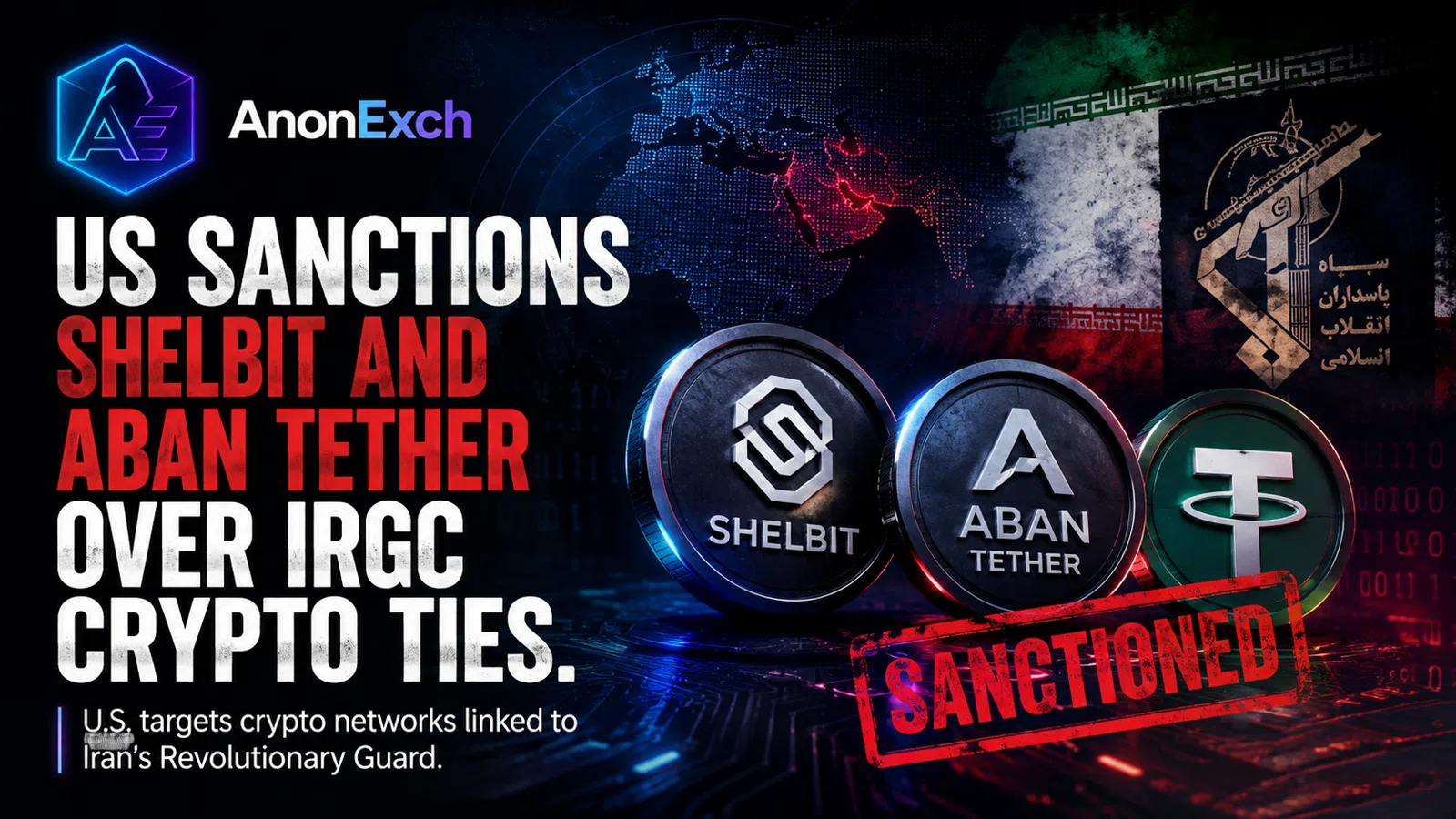
The US Treasury Department has sanctioned two Iranian cryptocurrency exchanges, Shelbit and Aban Tether, over allegations that they moved funds for Iran's Islamic Revolutionary Guard Corps. The Office of Foreign Assets Control announced the designations on August 7, 2026, adding the platforms to a growing list of Iranian crypto businesses cut off from the US financial system.
The action also targets Siavash Kayvanpour, an Iranian national linked to the exchanges, along with front companies he allegedly operated in Georgia, Poland, and the United Arab Emirates.
What the Treasury Alleges
According to OFAC, wallets connected to the IRGC sent more than $1 million in cryptocurrency to Shelbit, while the exchange transferred over $2 million back to IRGC-controlled addresses. Wallets tied to Kayvanpour also moved more than $2 million to Nobitex, Iran's largest crypto exchange, which the US sanctioned earlier.
The Treasury argues that these platforms give the IRGC something it struggles to obtain through traditional banking: access to international markets. Because most banks refuse Iranian transactions, crypto exchanges that convert rials into stablecoins or Bitcoin can serve as a workaround for moving value across borders.
Treasury Secretary Scott Bessent left little doubt about the department's position. "Whether in dollars, rials, or crypto, Treasury will hunt down and dismantle the illicit financial networks that keep the regime afloat," he said in the announcement.
Part of a Much Larger Campaign
The sanctions against Shelbit and Aban Tether do not stand alone. The US has steadily expanded its pressure on Iran's crypto sector since its military conflict with Iran began, and the cumulative numbers have become substantial.
In July, authorities froze $131 million in Iran-linked cryptocurrency. An April action blocked $344 million in USDT held across addresses on the Tron network. In total, the US has seized or frozen nearly $1 billion in Iran-connected digital assets since the conflict started.
Several major Iranian exchanges already sit on the sanctions list, including Nobitex, Wallex, Bitpin, and Ramzinex. Nobitex alone reportedly handles around half of all crypto trading in Iran, which means a significant share of the country's digital asset activity now flows through sanctioned infrastructure.
Why Stablecoins Make Enforcement Possible
The scale of these freezes highlights an uncomfortable fact for anyone using crypto to evade sanctions: centralized stablecoins are surprisingly easy to police.
Tokens such as USDT are issued by companies that can block individual addresses at the contract level. When OFAC designates a wallet, the issuer can freeze every token it holds, regardless of where in the world the owner sits. The $344 million frozen on Tron in April demonstrated exactly this mechanism at work.
Bitcoin and other decentralized assets cannot be frozen the same way, but they leave a permanent public record. Blockchain analytics allowed investigators to trace the flows between IRGC wallets, Shelbit, and Nobitex in the first place. Sanctioned actors face a difficult trade-off: stablecoins offer price stability but carry freeze risk, while decentralized coins avoid issuer control but expose transaction histories forever.
What the Designations Mean in Practice
Sanctions cut the designated exchanges and individuals off from any US person or business. American companies, including crypto platforms, stablecoin issuers, and payment processors, must block their assets and refuse their transactions.
The practical effects reach further than the US border. Foreign exchanges that continue serving sanctioned entities risk secondary sanctions, which can sever their own access to dollar markets. Most large international platforms therefore screen customers and transactions against OFAC's list, isolating designated businesses from the mainstream crypto economy.
For the front companies in Georgia, Poland, and the UAE, the designations put local regulators and banks on notice. Jurisdictions that want to maintain good standing with the US financial system generally act against named entities operating within their borders.
Frequently Asked Questions
Which crypto exchanges did the US sanction?
OFAC sanctioned Shelbit and Aban Tether, two Iranian crypto platforms, on August 7, 2026. The action also designated Siavash Kayvanpour and front companies in Georgia, Poland, and the UAE. Nobitex, Wallex, Bitpin, and Ramzinex were sanctioned in earlier actions.
Why were Shelbit and Aban Tether sanctioned?
The Treasury alleges both exchanges facilitated transactions for the Islamic Revolutionary Guard Corps, helping Iran evade sanctions. IRGC-linked wallets reportedly sent over $1 million to Shelbit, which transferred more than $2 million back to IRGC-controlled addresses.
How much Iran-linked crypto has the US frozen?
Nearly $1 billion since the US-Iran conflict began. That includes $131 million frozen in July and $344 million in USDT blocked across Tron addresses in April 2026.
Can cryptocurrency actually be frozen?
Centralized stablecoins like USDT can be frozen because their issuers control the token contracts and can block designated addresses. Decentralized assets such as Bitcoin cannot be frozen directly, but their public ledgers allow investigators to trace and follow the funds. This article is not supposed to provide financial advice. Digital assets are risky. Be sure to do your own research and consult your financial advisor before investing.