Secure Your XRP: Best XRP Wallet Options & Tips
Unlock the best XRP wallet options for security and convenience. Learn to manage XRP effectively, whether trading, holding, or using Rakuten Wallet in Japan.
An XRP wallet is the tool you use to control access to XRP on the XRP Ledger, whether you are holding long term, trading actively, or preparing to move funds between exchanges and self-custody. The right choice depends less on hype and more on custody, security, transaction habits, and whether you need XRPL-specific features such as destination tags, reserves, trust lines, or escrow visibility. This guide breaks down practical XRP wallet options and explains how large transfers, exchange listings, and cold storage should influence your decision.
What should an XRP wallet actually do?
A good XRP wallet should let you securely send, receive, and manage XRP while making XRP Ledger rules clear before you move money. Unlike a simple exchange balance, a self-custody xrp wallet controls the private key to an on-ledger account, and that account has network-specific requirements, including a base reserve designed to protect the ledger from spam. The XRP Ledger documentation explains that each address must maintain a minimum reserve, while additional ledger objects can require owner reserves. (xrpl.org)
That means wallet selection is not just about a clean interface. You want a wallet that clearly shows balances, fees, destination tags, pending transactions, and account status. If you send XRP to an exchange, the destination tag can be essential because many exchanges use shared addresses and tags to credit individual users; when sending to your own self-custody wallet, a tag is usually not required. (ledger.com)
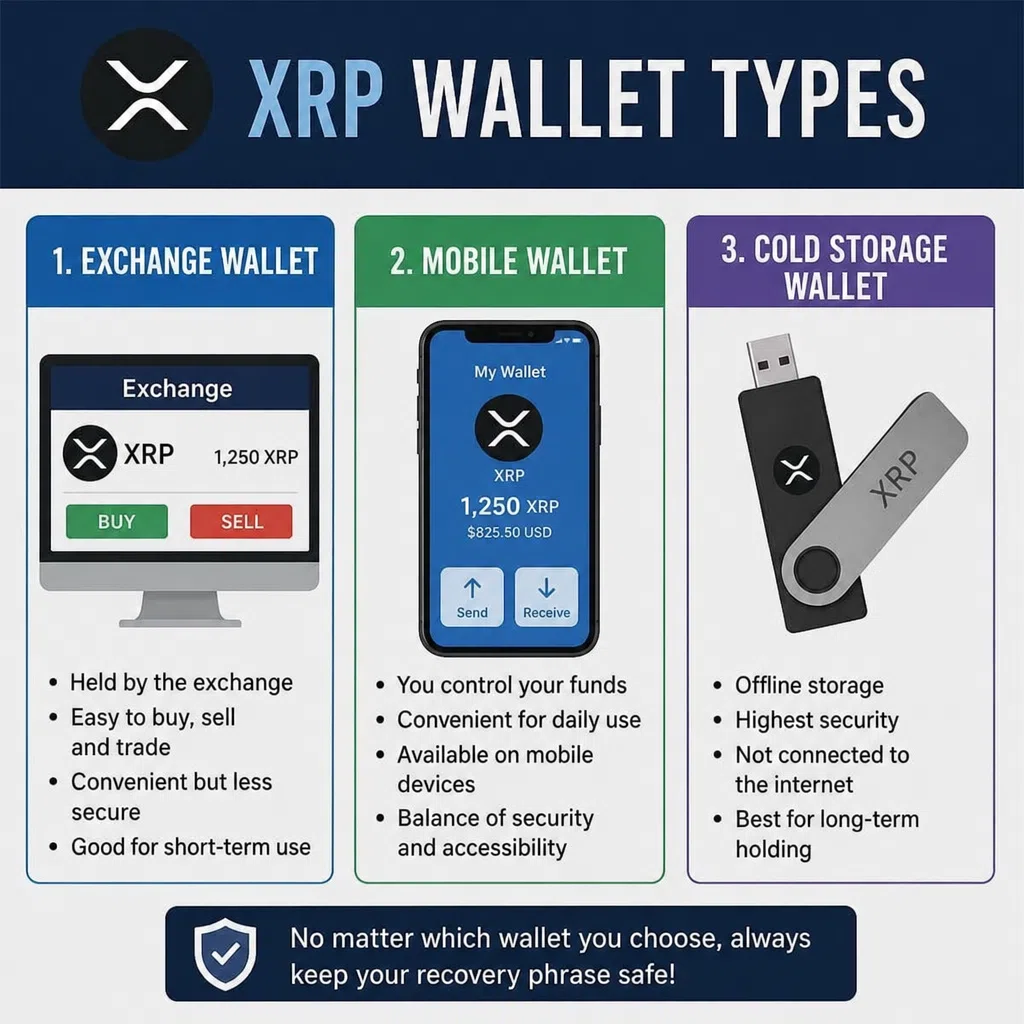
The main XRP wallet types
Most XRP holders end up choosing from three broad categories: exchange wallets, hot self-custody wallets, and cold wallets. Each serves a different purpose, so the “best” wallet is usually a combination rather than one permanent answer.
Exchange wallets are convenient for buying, selling, and fast trading. They are also custodial, meaning the platform controls the wallet infrastructure and credits your account internally. Rakuten Wallet, for example, is part of Rakuten Group’s fintech segment and is described by Rakuten as a crypto asset exchange service. (global.rakuten.com)
Hot self-custody wallets are apps connected to the internet, typically used on mobile or desktop. Xaman, formerly Xumm, is built around the XRP Ledger and describes itself as self-custodial, meaning users control the keys to their XRPL accounts. (help.xaman.app) Atomic Wallet and similar multi-asset apps may appeal to users who manage many cryptocurrencies from one interface, but you should verify current XRP support, recovery options, and transaction details directly from the provider before depositing meaningful funds.
Cold wallets keep private-key access offline or separated from everyday devices. Hardware wallets such as Ledger support XRP and can pair with wallet software for signing transactions, while Ballet’s cold storage products use a non-electronic BIP38-based design in which key material is stored on the physical wallet rather than in the mobile app. (ledger.com)
Matching the wallet to the way you use XRP
Your wallet should match your behavior. Someone who trades weekly has different needs from someone storing XRP for years, and a developer testing XRPL features has different needs from a retail user sending funds to an exchange once a month.
Use these scenarios as a starting point:
- Long-term holders: Prioritize an xrp cold wallet or hardware wallet. The goal is to reduce exposure to malware, phishing, SIM swaps, and app compromise.
- Active traders: Keep only the trading amount on a reputable exchange wallet and move longer-term holdings to self-custody.
- Everyday mobile users: Use a self-custody mobile wallet that makes destination tags, fees, and transaction confirmation easy to understand.
- XRPL power users: Choose an XRPL-native wallet that supports the features you actually use, such as trust lines, tokens, NFTs, DEX activity, or escrow-related interactions.
- Institutions or high-value users: Look for policy controls, approval workflows, audit trails, and regulated custody rather than relying on a consumer app alone.
For many people, the safest setup is layered: a small exchange balance for trading, a mobile wallet for routine transactions, and cold storage for the majority of holdings. That reduces the chance that one mistake exposes everything.
How should you read an XRP large wallet transaction?
An XRP large wallet transaction proves that funds moved on-chain, but it does not automatically prove selling, buying, institutional adoption, or a market dump. If you searched for “ripple moved 200 million xrp from a company wallet,” the practical lesson is not that you should copy a whale; it is that XRP’s ledger transparency lets observers see transfers while still leaving the purpose of those transfers open to context.
Large XRP movements often attract attention because Ripple has historically held substantial XRP and uses escrow to create a more predictable release schedule. Ripple’s own explanation says it placed 55 billion XRP into escrow to add predictability to supply, and SEC filing language has also described the monthly escrow release and re-escrow process. (ripple.com)
In March 2026, for example, crypto media reported a 200 million XRP transfer between Ripple-controlled wallets following an escrow cycle. The key detail was that reports characterized it as an internal movement rather than a confirmed sale to the market. (blockonomi.com)
For wallet choice, the takeaway is simple: your wallet should help you verify addresses, review transaction details, and avoid panic-driven mistakes. On-chain transparency is useful, but it does not replace source verification or sound custody habits.
Japan, Rakuten Wallet, and exchange access
The xrp rakuten wallet japan story matters because exchange access can influence liquidity, convenience, and public attention, but it should not be confused with personal wallet security. Rakuten announced XRP margin trading support years ago, and more recent crypto coverage reported new XRP spot-trading and Rakuten ecosystem integrations in April 2026; users should still confirm actual availability and terms inside official Rakuten Wallet channels before acting. (global.rakuten.com)
Headlines such as “xrp price holds gains fueled by rakuten wallet listing” can be useful for understanding market sentiment, but they are not a storage strategy. A listing may make XRP easier to access in a specific market, and regulated platforms may provide familiar account protections or compliance processes. Still, exchange custody means you rely on the platform’s controls, withdrawal policies, and operational stability.
Rakuten’s public materials have also described customer-asset protection practices for Rakuten Wallet, including separate management of customer money and cold-wallet management for crypto assets, with multi-signature private-key controls except for some currencies. (global.rakuten.com) That is relevant for evaluating a platform, but it does not remove the need to decide how much XRP you are comfortable leaving with any custodian.
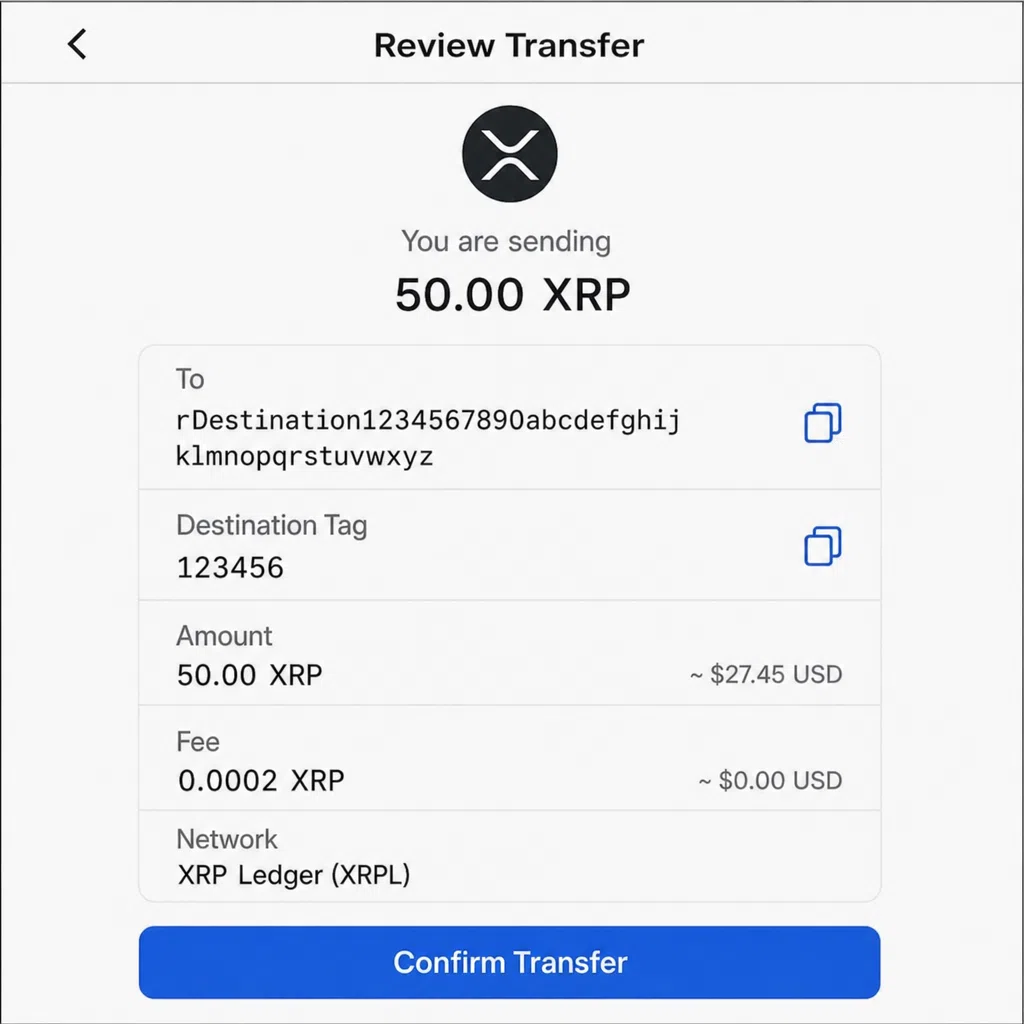
Security habits that matter before every XRP transfer
Most XRP losses do not happen because the ledger fails. They happen because people send to the wrong address, ignore a destination tag, install a fake wallet, reveal a recovery phrase, or rush after seeing market news.
Before sending XRP, use this checklist:
- Confirm the wallet source. Download apps only from official websites or verified app stores, and beware of sponsored search results that mimic real wallets.
- Check the destination tag. If the recipient is an exchange, confirm whether a tag is required and copy it exactly.
- Send a small test amount first. This is especially useful before a large transfer or when using a new platform.
- Review the network and address. XRP must go to an XRP Ledger address, not to an unrelated chain or wrapped-token address unless the platform explicitly supports that flow.
- Understand the reserve. A newly funded XRPL account must maintain the required reserve, so do not expect every last drop of XRP to be immediately spendable. (xrpl.org)
- Protect recovery material offline. Never type a seed phrase into a website, chat, email, or support form.
- Separate spending and savings. Use a smaller hot wallet for routine activity and keep long-term XRP in cold storage.
These steps feel basic, but they are exactly the habits that prevent expensive errors when prices move quickly or when social media is focused on a whale transfer.
Choosing the best cold wallet for XRP
The best cold wallet for xrp is the one you can secure correctly, recover confidently, and use without bypassing its own protections. For many users, a hardware wallet such as Ledger is practical because it supports XRP while keeping signing separated from the computer or phone used to prepare the transaction. (ledger.com)
A non-electronic option such as Ballet may suit users who want cold storage without firmware updates or USB/Bluetooth signing workflows. Ballet states that its app does not store or transmit the private key and that the BIP38 two-factor private key is stored on the physical wallet itself. (support.ballet.com) Xaman users may also consider Xaman Tangem cards for savings accounts, since Xaman describes the card chip as generating and holding a non-extractable private key. (help.xaman.app)
Whichever xrp cold wallet you choose, set it up slowly:
- Create or initialize it in a private place.
- Record recovery or passphrase material on durable offline media.
- Test recovery instructions before storing a large balance.
- Fund it with a small XRP amount first.
- Verify that you can view the receiving address independently.
- Store backups separately from the device or card.
- Document your process for heirs or trusted recovery contacts without exposing the secret itself.
Cold storage is powerful because it reduces online attack surface. It is also unforgiving: if you lose the device, card, passphrase, or recovery phrase without a backup path, no exchange or wallet company can magically restore self-custodied funds.
A practical final takeaway
Choosing an XRP wallet is a risk-management decision. Use exchanges for access, hot wallets for convenience, and cold wallets for long-term protection. Pay close attention to destination tags, reserves, and official wallet sources, and treat every xrp large wallet transaction as a data point rather than a trading signal.
Market stories around Ripple transfers, Rakuten Wallet in Japan, or sudden price gains may change the conversation, but they do not change the fundamentals of custody. The safest XRP setup is one you understand, can recover, and can use calmly when the market is loud.

